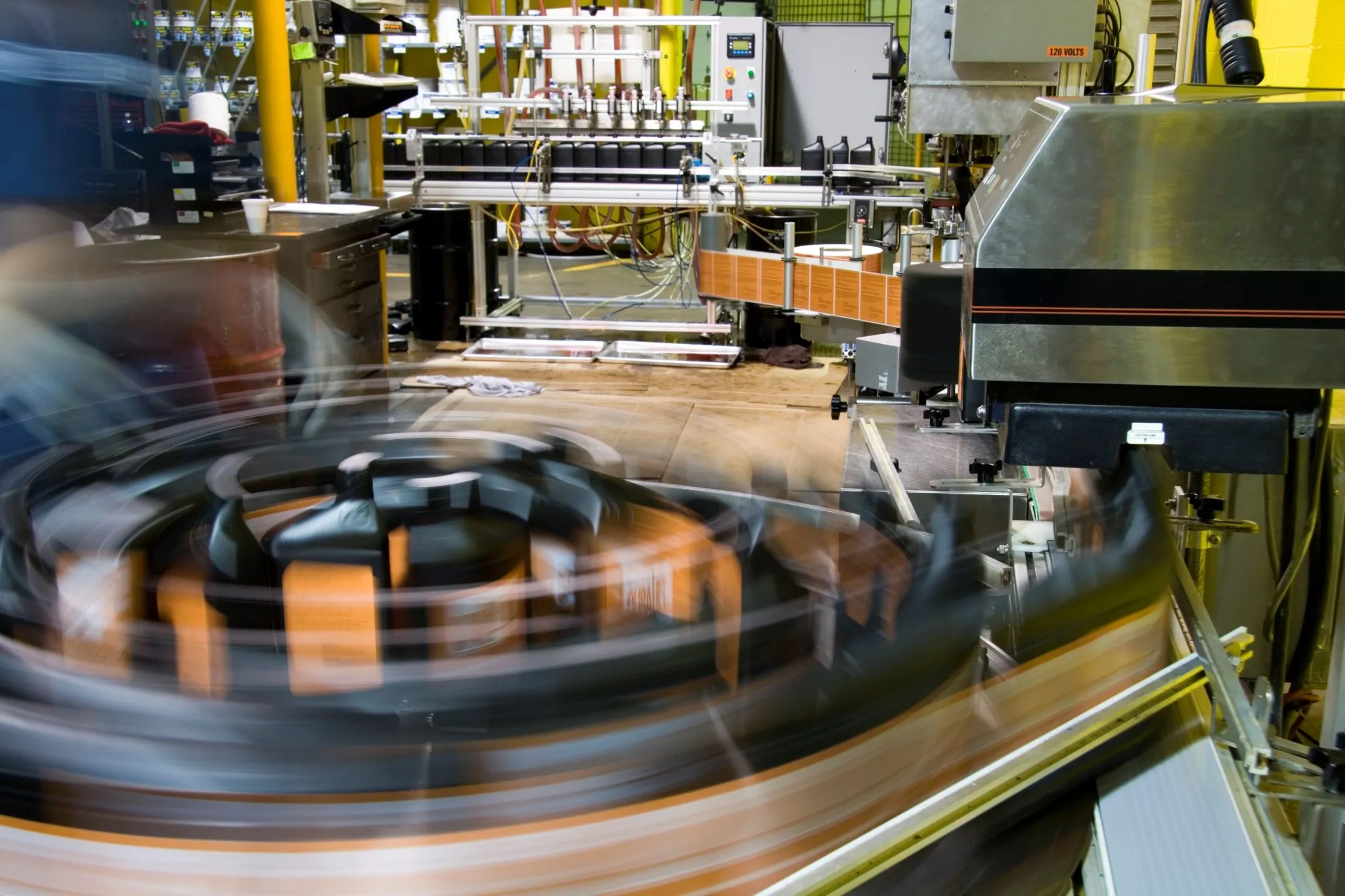
Solutions · Packaging
Fill lines, coating and dispensing stations, and high-speed converting.
Packaging lines run continuously, at high cycle rates, and a bad fill, seal or coating often isn’t caught until the next station — or a customer complaint. The continuous-capture and quality-inspection capability HSCAM has demonstrated elsewhere is what a packaging pilot would build on.
Capability fitShows how a demonstrated capability — droplet/dispensing inspection at Fraunhofer IIS/EAS Dresden — applies to packaging-line problems.
The problem, in this industry
Demonstrated capabilities relevant to this industry
Each of these is a real, demonstrated HSCAM capability — shown here at the pattern level, with a link to where it was actually proven.
Sorting good parts from bad, automatically
Telling a good part from a defective one at production speed is a judgement call today — one that doesn’t scale to every part, every shift.
High-contrast, consistently framed captures are what an AI inspection model needs to learn the difference. STREAMER generates that training data; in the droplet-inspection research setup, a NANO unit triggers on the image and characterizes the frame it captures, on the camera.
See it demonstratedA continuous process, watched around the clock
The process never stops, so there is no good moment to point a camera at it — every cut, cycle or pass has to be caught, not just the ones you happen to be watching for.
STREAMER cameras stream continuously over standard USB 3.0. In-camera compression of about 5:1 reduces one camera’s ~1.44 GB/s to ~300 MB/s, which allows direct recording to a suitably specified SSD.
See it demonstratedSize, speed, acceleration — measured, not estimated
Knowing a workpiece moved "too fast" or "out of tolerance" isn’t enough — the measurement has to be tied to the exact video frame it happened on, or it can’t be trusted.
Image and measurement data are captured on the same camera clock, so a workpiece’s position, speed or acceleration lines up with the video frame it belongs to.
See it demonstratedThe evidence behind this page
- Droplet recording
- 1,280 × 128 px @ 8,000 fps
- Lighting
- Backlit silhouette, coaxial
- Setting
- Research rig, not a packaging line
Realtime Droplet Inspection research setup at Fraunhofer IIS/EAS Dresden.
See the full applicationWhat helps us scope a request in this industry
- Cycle rate: fills, seals or parts per minute
- What counts as a defect: fill level, seal, coating or droplet shape
- Whether the images are for review, for training an inspection model, or to drive a reaction
- Available optical access for backlighting
Recognize this problem in your own process? HSCAM is looking for pilot projects in this industry.
Possible first tests
- A sporadic fault at the feeder or infeed
- A product that goes wrong during a transfer between stations
- An irregular fill or dispensing event that the line’s own measurements do not explain
Whether recording suits your line is checked in your actual setup before any test is agreed. The droplet-inspection results on this page come from a research rig, not from a packaging line.
Talk to an engineer about packaging
Tell us your process, your speed, and what you need to see or measure.
Helpful, but not required
- What your process does and what goes wrong, or what you cannot see today
- Speed or cycle time, if you know it
- Measurement or trigger signals that exist on the machine
- Environment: temperature, lighting, mounting space
contact@hscam.com · hscam.com