Application · Synchronized high-speed video & sensor data acquisition
At 140 m/s, a 10 ms timing error is 1.4 metres.
When a high-speed camera and a separate measurement system each keep their own clock, the two datasets drift apart. This is how HSCAM keeps them aligned.
Real demonstration
Multi-camera synchronization, shown live
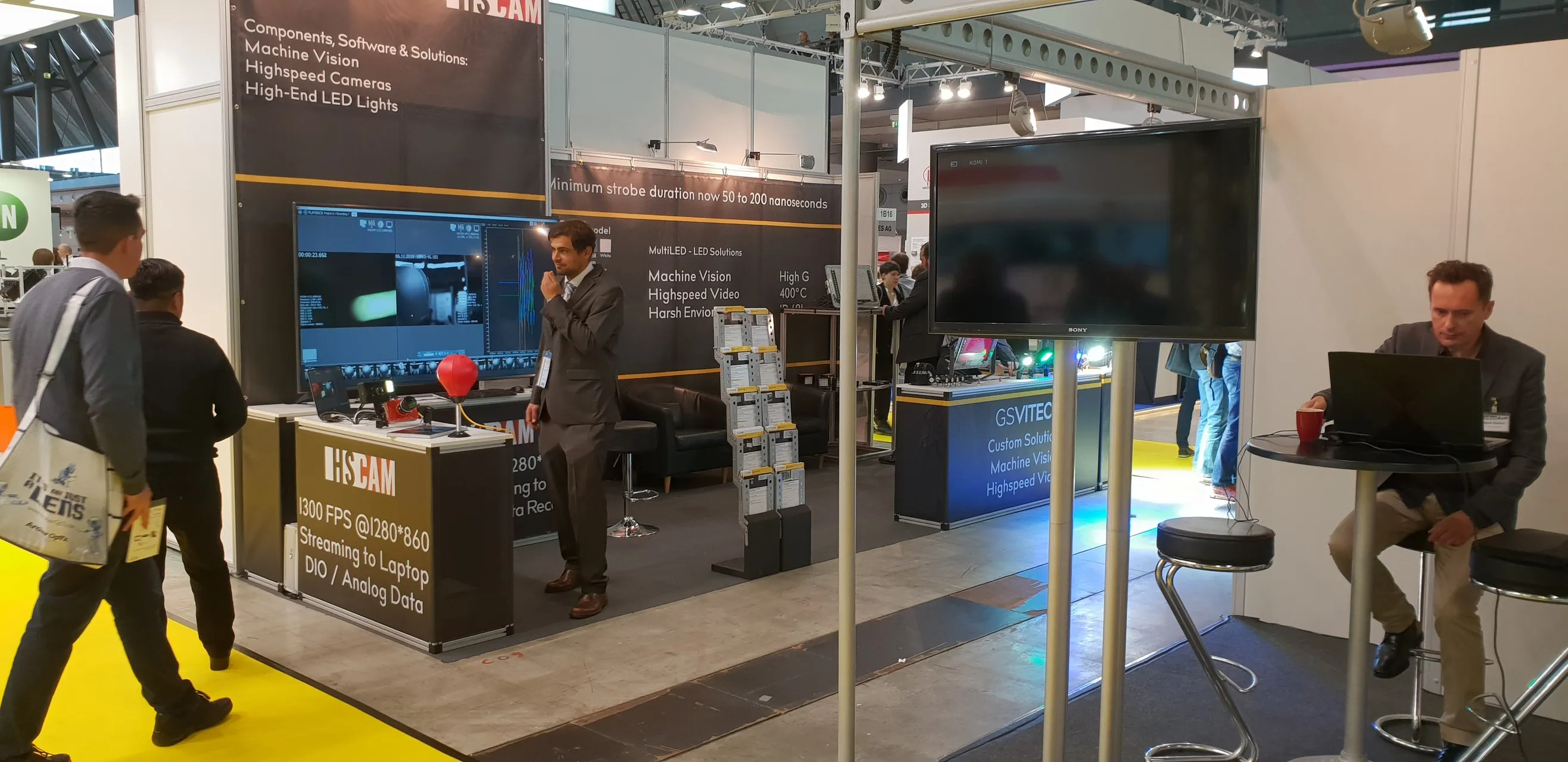
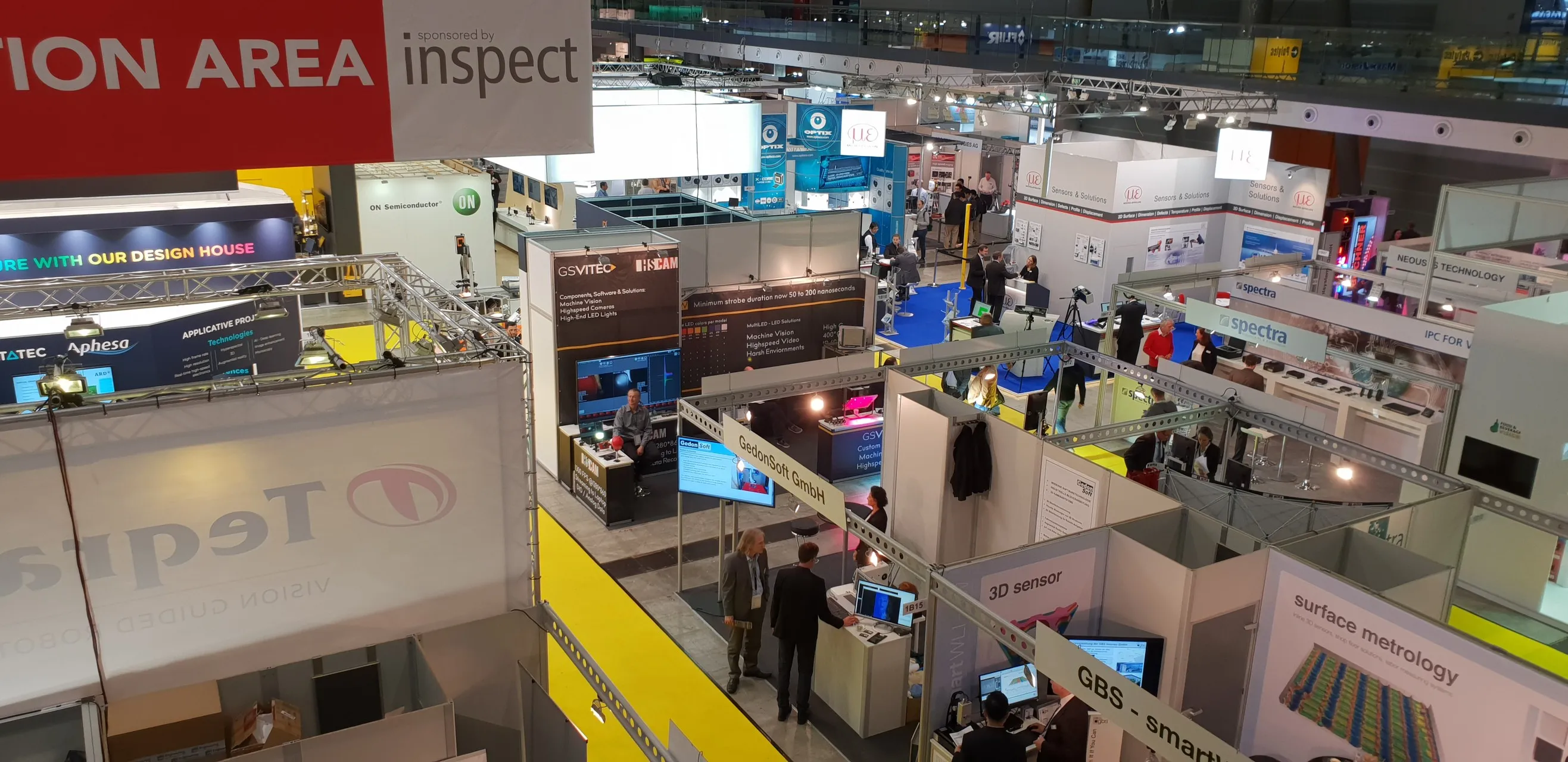
This setup shows synchronization of multiple cameras, analog inputs, and automated trigger options — demonstrated at the Messe Vision trade fair and reviewed live in HSCAM's own recording software.
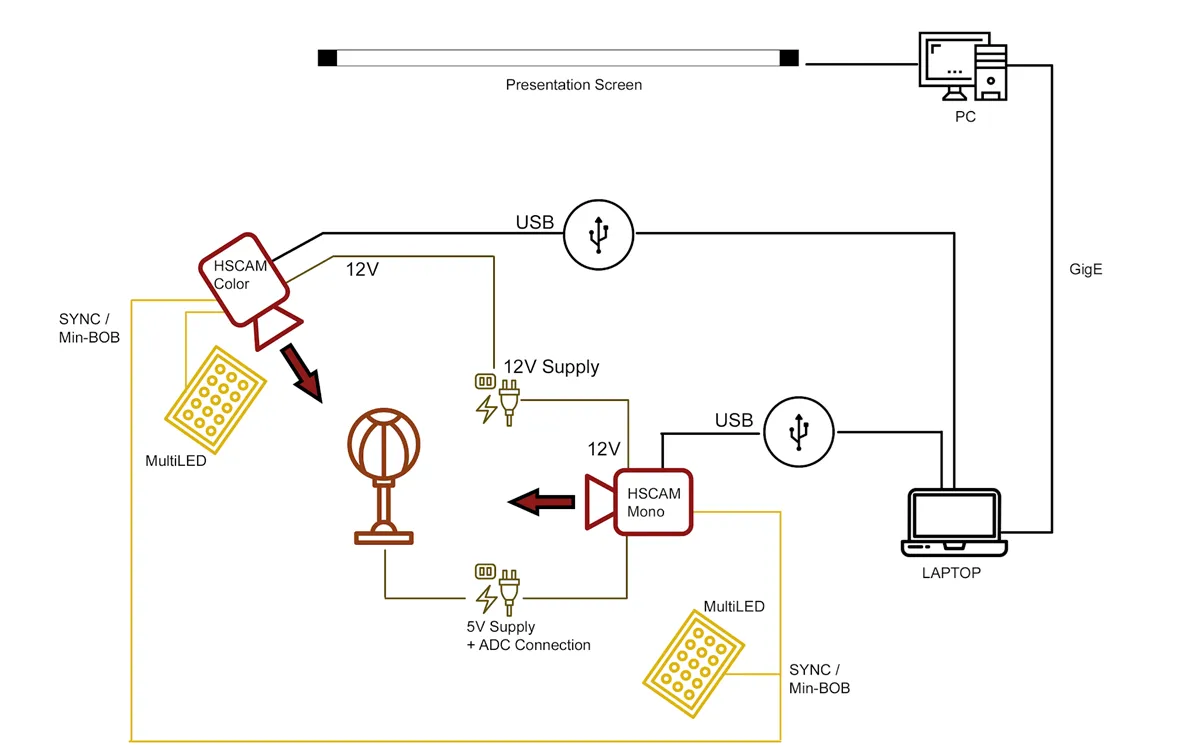
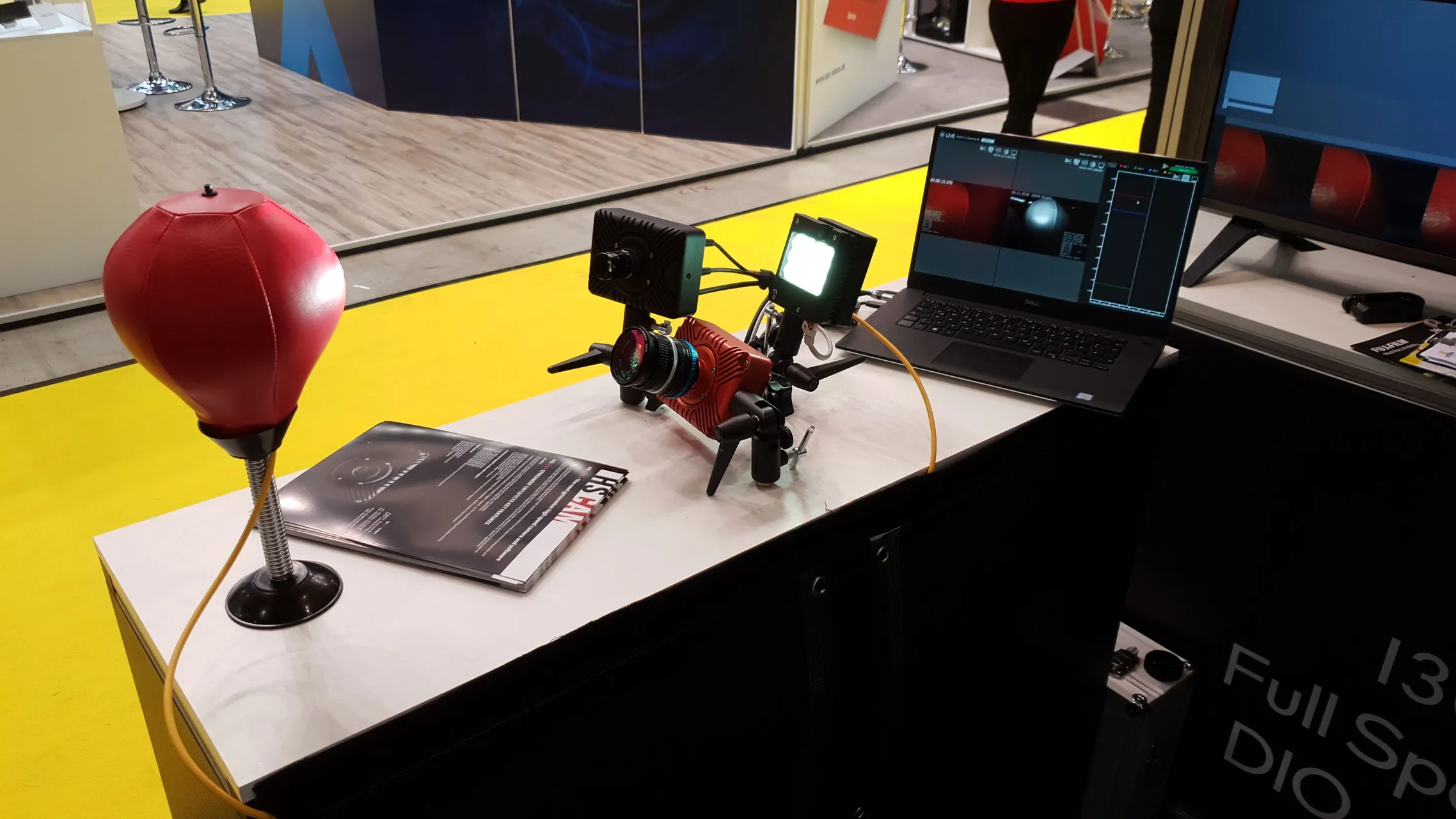
HSCAM STREAMER 1M13 and 1C13, in MultiCAM mode synced by exposure, triggered on an ADC threshold value with a 1 second pre-trigger buffer. A Python plugin for HSCam Viewer drove acquisition, with a live measurement-evaluation script generating marker/trigger events whenever the ADC value crossed a definable threshold, and automated replay to a separate display.
Dual-camera playback with synchronized ADC data
- Cameras
- 1C13 + 1M13
- Recorded at
- 1,280 × 864 px @ 1,000 fps
- Compression
- ~4.15 / ~4.19 (overlay)
- On-screen date
- 08.11.2018
Real screen recording from Messe Vision 2018 — HSCam Viewer's own on-screen figures, not restated from a source document.
Single-camera view with 4-channel ADC graph
- Camera
- HSCAM 1M13
- Channels shown
- ADC 1–4
- View
- Single camera + waveform
- Source
- Messe Vision 2018
Real screen recording from the same demo, showing the measurement-channel side on its own.
Why this is hard
Two systems, two clocks, one process
A separate camera and measurement system, synced only loosely (e.g. by a shared trigger signal or a control-system cycle), accumulate timing error that has no way to be corrected after the fact — the data has already been recorded out of alignment.
Measured performance
Timing and position: two separate results
How tightly frames and samples line up in time is one measurement; how accurately the resulting positions line up is another. HSCAM's steel-mill documentation reports them separately.
Temporal — timing jitter
~10 ms → nanosecond-range jitter
Without vs. with HSCAM's frame-synchronous acquisition.
Spatial — synchronization accuracy
Sub-millimeter accuracy
An independently stated figure.
HSCAM's approach
Measurement data captured on the camera's own clock
HSCAM STREAMER cameras acquire analogue and digital measurement channels internally, on the same clock as the image sensor — rather than relying on an external system to align two independent clocks after the fact.
Built-in channels
4× 16-bit ADC (±10V) · 2× GPIO
Extended channels
Up to 20 ADC via HS-DAQ
Multi-camera sync
MultiCAM mode, synced by exposure
Evidence
Demonstrated Results
Trade-show demonstration Demonstrated Results — trade-show capability demo
Punching-Ball measurement fusion
HSCAM STREAMER 1M13 and 1C13 in MultiCAM mode, synchronized by exposure, triggered on an ADC threshold value, tracking a punching ball. Live HSCam Viewer software shown on-screen.
- Pre-trigger buffer
- 1 second
- Recorded at
- 1,280 × 864 px @ 1,000 fps, both cameras
 Documented deployment
 Demonstrated Results — real industrial deployment
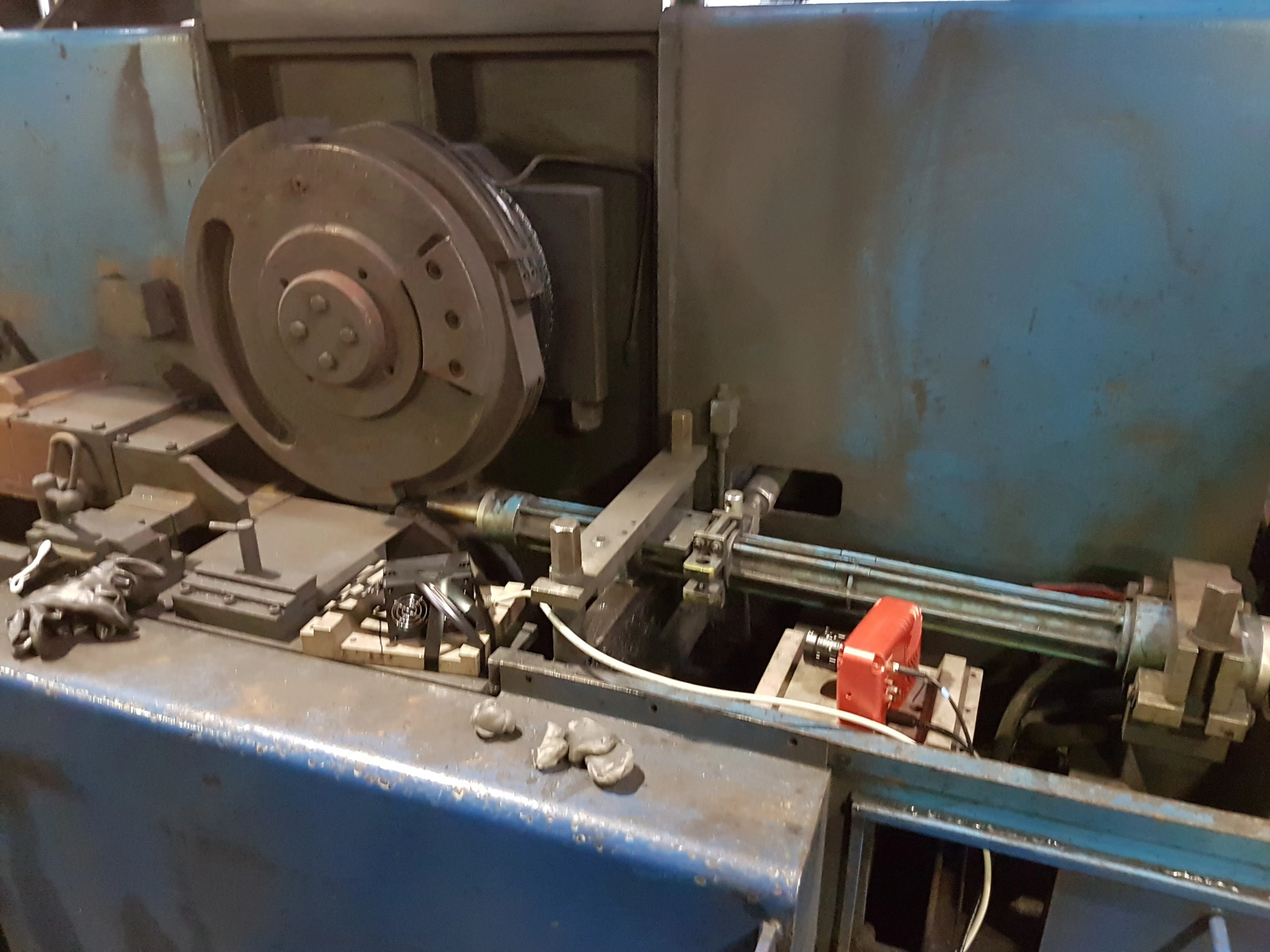
Steel & rolling mill process monitoring
HSCAM STREAMER 1M13 deployed for 24/7 monitoring of a high-speed steel shear-trimming process, with synchronized measurement data acquisition.
- Timing jitter (temporal)
- ~10 ms → nanosecond-range jitter with HSCAM sync
- Video / measurement sync accuracy (spatial — a separate claim, not derived from the timing figure above)
- Sub-millimeter accuracy
- Data rate (stated requirement)
- ~5.2 GB/s raw from 4 cameras → resulting rate < 1 GB/s across the production chain
Relevant hardware
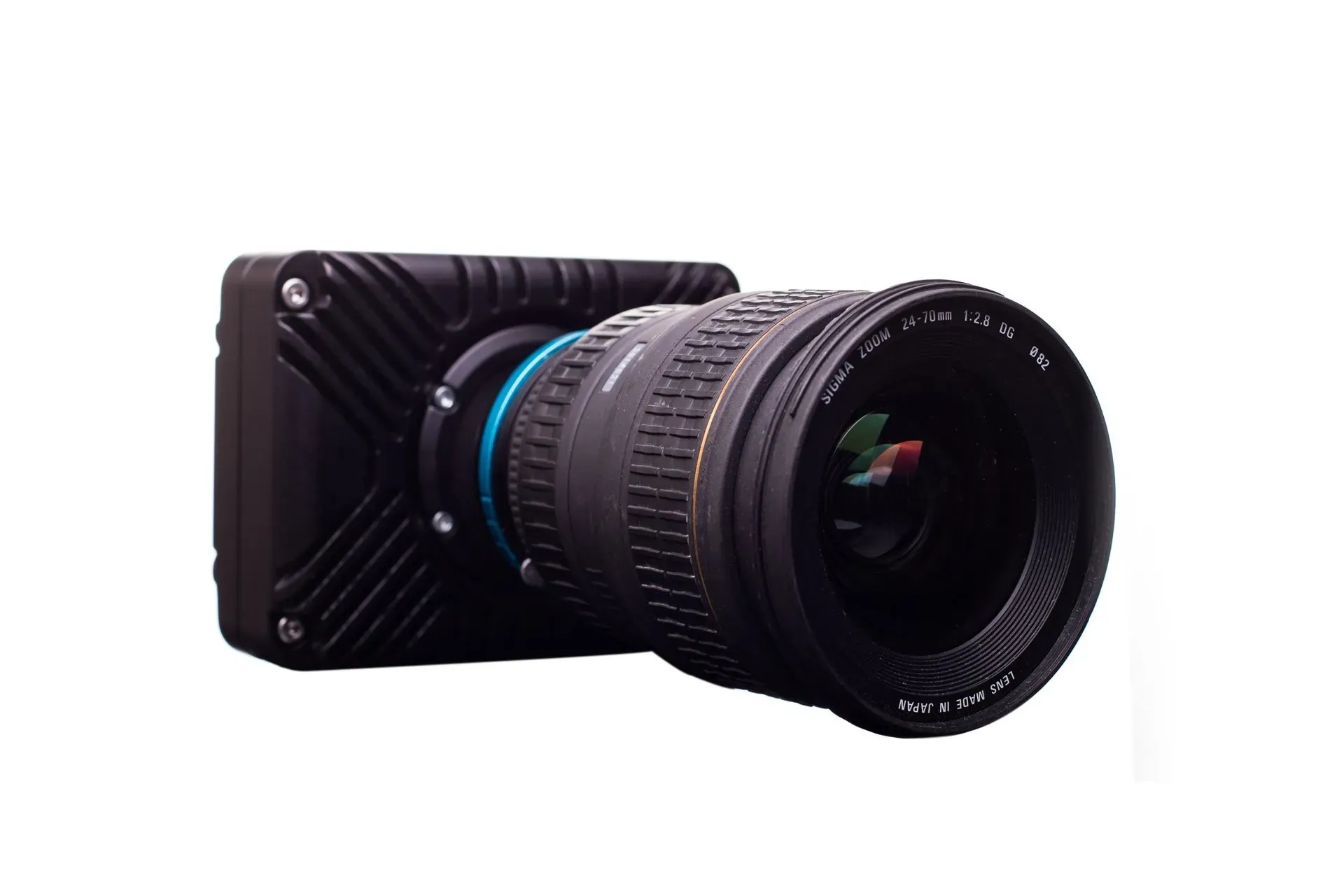
Cameras used in this application
Integration
Configure triggers in Python, go to FPGA for microsecond timing
Trigger logic, pre-trigger buffering and per-channel measurement acquisition are configured through HSCAM's Python scripting plugin. For deterministic, sub-microsecond response there is an FPGA tier, integrated by HSCAM.
| Tier | Latency · platform |
|---|---|
| Python-Framework camera SDK | < 100 ms latency · PC/Laptop · customer with provided examples |
| Camera SDK integration | < 100 ms latency · PC/Laptop · customer with additional HSCAM support |
| FPGA integration | < 1 µs latency · on-camera · HSCAM only for now |
| DAQ extension | < 1 µs latency · DAQ module · HSCAM only for now |
Related
The camera behind it
Recognize this problem in your own process?
I have a similar problem →Talk to an engineer about your synchronization requirement
Tell us your timing tolerance, channel count and trigger source.
HSCAM GmbH · Angerstraße 40–42, Haus B · 04177 Leipzig, Germanycontact@hscam.com · hscam.com